Optimalisasi Perilaku Perawatan Diri dan Kemandirian Lansia Melalui Edukasi Kesehatan Hipertensi
Optimizing Self-Care Behavior and Independence of the Elderly Through Hypertension Health Education
DOI:
https://doi.org/10.64621/hjics.v1i2.44Keywords:
Hipertensi, Lansia, Perawatan Diri, Kemandirian, Edukasi KesehatanAbstract
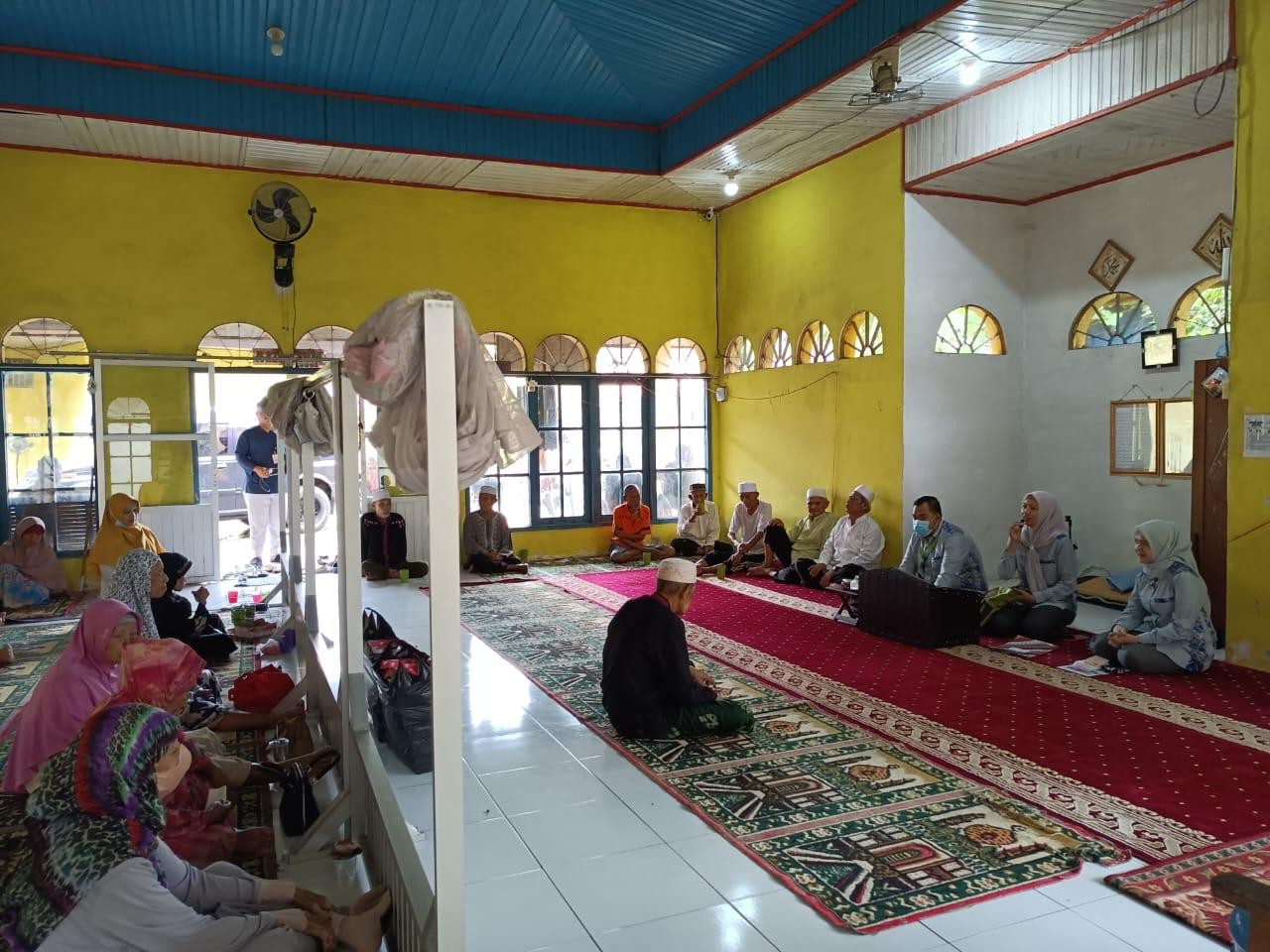
Latar Belakang: Hipertensi memiliki dampak yang signifikan bagi kesehatan masyarakat. Beberapa masalah yang biasa terjadi akibat gejala hipertensi yaitu penurunan perawatan diri dan tingkat kemandirian lansia. Untuk itu diperlukan terapi nonfarmakologi dalam mengatasi masalah tersebut, yaitu dengan edukasi kesehatan hipertensi. Tujuan kegiatan pengabmas ini adalah untuk memaksimalkan perilaku perawatan diri dan kemandirian pada lansia hipertensi melalui edukasi kesehatan hipertensi. Metode: Kegiatan dilaksanakan dalam dua tahapan yaitu tahap pengukuran perawatan diri dan kemandirian lansia dan tahap edukasi kesehatan hipertensi. Peserta kegiatan para lansia di PPRSLU Budi Sejahtera Provinsi Kalimantan Selatan berjumlah 30 orang. Hasil: telah dilakukan edukasi kesehatan hipertensi pada lansia dan pengukuran perawatan diri mayoritas cukup (76.7%) dan kemandirian lansia mayoritas ketergantungan ringan (66.7%). Kesimpulan: Edukasi kesehatan hipertensi penting diberikan untuk masyaraka khususnya lansia untuk mengoptimalkan perawatan diri dan kemandirian.
Downloads
References
Aryani, Lee, S. W. H., Kok, L. C., Efendie, B., & Paraidathathu, T. (2016). Chronic Care Model In Primary Care: Can It Improve Health-Related Quality of Life? IItegrated Pharmacy Research and Practice, 5, 11–17. Retrieved February 26, 2019 from https://www.devopress.com
Guo, J., Huang, X., Dou, L., Yan, M., Shen, T., Tang, W., & Li, J. (2022). Aging and aging-related diseases: from molecular mechanisms to interventions and treatments. Signal Transduction and Targeted Therapy, 7(1). https://doi.org/10.1038/s41392-022-01251-0
Hastaoglu, F., & Mollaoglu, M. (2022). The effects of activities of daily living education on the independence and life satisfaction of elders. Perspectives in Psychiatric Care, 58(4), 2978–2985. https://doi.org/10.1111/ppc.13149
Kemenkes RI. 2020. Hipertensi. Online. Diakses http://www.p2ptm.kemkes.go.id/infogra phic-p2ptm/hipertensi-penyakit-jantungdan-pembuluh-darah/apa-itu hipertensitekanan-darah-tinggi
Lestari, I. G., & Isnaini, N. (2018). Pengaruh Self Management Terhadap Tekanan Darah Lansia Yang Mengalami Hipertensi. 02(11), 7–18.
Li, S., Craig, S., Mitchell, G., Fitzsimons, D., Creighton, L., Thompson, G., & Stark, P. (2025). Nurse-Led Strategies for Lifestyle Modification to Control Hypertension in Older Adults: A Scoping Review. Nursing Reports, 15(3). https://doi.org/10.3390/nursrep15030106
Mardhiah, A., Asnawi Abdullah, H., 2015. Pendidikan Kesehatan Dalam Peningkatan Pengetahuan, Sikap Dan Keterampilan Keluarga Dengan Hipertensi-Pilot Study. J. Ilmu keperawatan 3.
Mosca, L., Aggarwal, B., Mochari-Greenberger, H., Liao, M., Blair, J., Cheng, B., … Umann, T. (2012). Association between having a caregiver and clinical outcomes 1 year after hospitalization for cardiovascular disease. American Journal of Cardiology. https://doi.org/10.1016/j.amjcard.2011.07.07
Mulyati, L., Yetti, K., & Sukmarini, L. (2013). Analisis Faktor yang Mempengaruhi Self Management Behavior pada Pasien Hipertensi. Jurnal Ilmu Kesehatan Bhakti Husada, 1(2), 112–123. https://doi.org/10.24198/jkp.v1n2.7
Ohura, T., Hase, K., Nakajima, Y., & Nakayama, T. (2017). Validity and reliability of a performance evaluation tool based on the modified Barthel Index for stroke patients. BMC Medical Research Methodology, 17(1), 131.
Pefbrianti D, Lestari DL, Ifansyah MN. (2023). Levine's conceptual model-based nursing intervention for blood pressure recovery in the elderly. International Journal of Health and Pharmaceutical (IJHP). Vol. 3 No. 3.
Siswoaribowo, A., Hayati, F., & Nurhanisa, A. (2023). Efektivitas Hypertension Self-Management Education (Hesme) Dengan Booklet Terhadap Perawatan Mandiri Keluarga Pasien Hipertensi. Jurnal Kesehatan Kusuma Husada, 14(2), 34–38. https://doi.org/10.34035/jk.v14i2.1006
WHO. (2018). World Health Statistics 2018: Monitoring Health for The SDG’s. Retrieved February 26, 2019 from https://apps.who.int/iris/handle/10665/272596
Downloads
Published
Issue
Section
License
Copyright (c) 2025 Diana Pefbrianti (Author)

This work is licensed under a Creative Commons Attribution 4.0 International License.